Hilversum Cultural Hub
The Hilversum Cultural Hub integrates audiovisual archives with youth participants to co-create game prototypes addressing complex societal issues like colonial legacies and misinformation. An iterative process helped to address initial challenges such as unclear role boundaries and youth recruitment, by forming a Youth Advisory Board and embedding the events within educational curricula. The game prototypes blend heritage storytelling with interactive design, engaging with themes such as media, fairness, our relationship with water.
Meet the Hub
The Hilversum Cultural Hub in the Netherlands brings together expertise in value-sensitive design, cultural sensitivity, and societal belonging through its partners:
- Cultural Heritage: Netherlands Institute for Sound and Vision (Cultural Hub Lead)
- Creative Industries: Dropstuff Media
- Higher Education: Amsterdam University of Applied Sciences
- Youth Citizens: Youth Advisory Board and Youth Participants
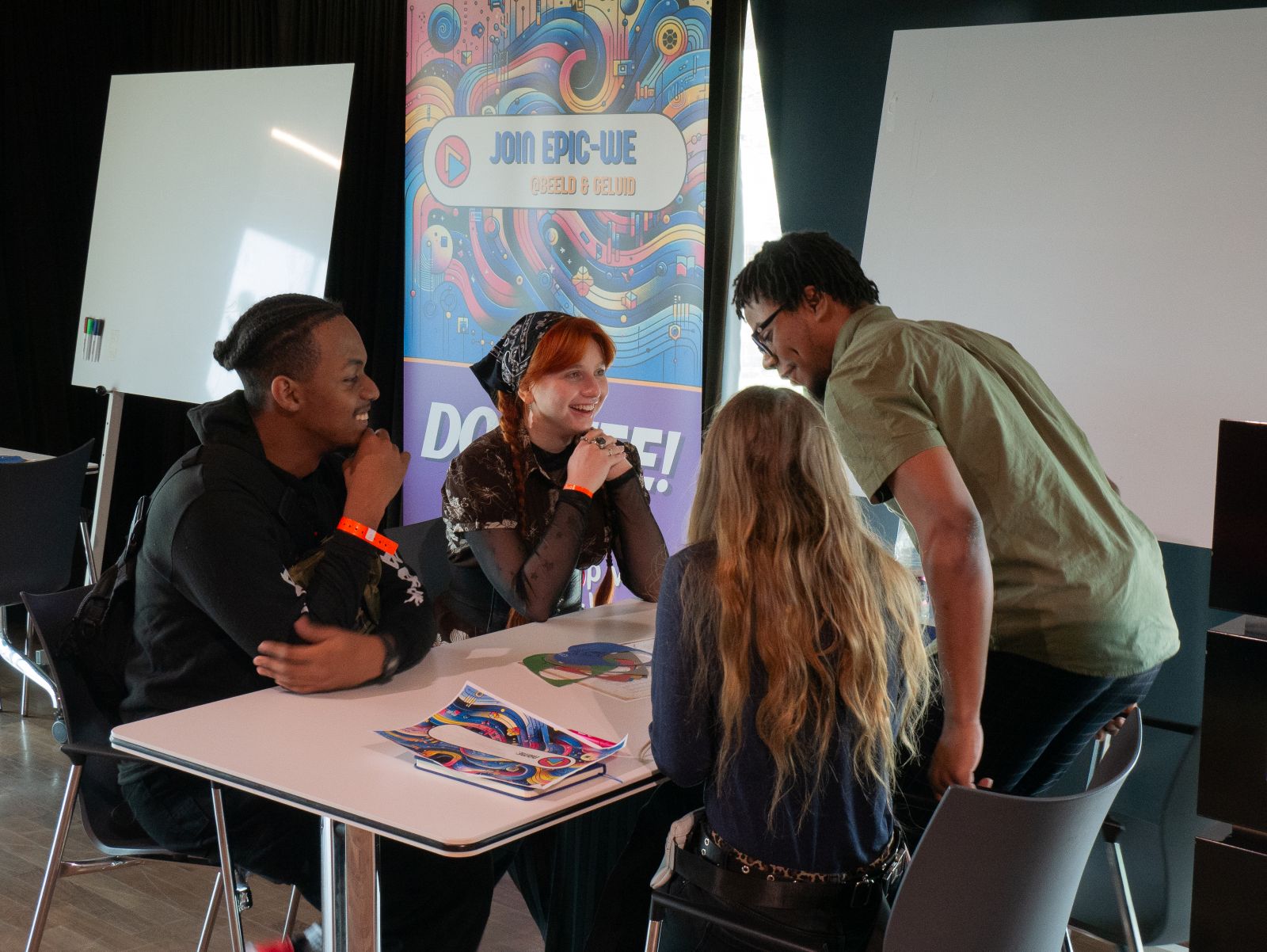
These partners were motivated to develop and use Game Jams to explore important thematic issues linked to current societal problems, including the impact of colonial legacies and online anti-democratic threats. They focussed on working with young people aged 16-24, and through the Game Jams they tried out approaches for multi-generational collaboration, facing challenges in the balance between project needs and the needs of the youth participants.
For me it’s about making games and I actually just love telling personal stories that people connect with and relate to. Isaiah, Game Jam participant
It’s a beautiful opportunity to illustrate the value of the cultural materials we hold by offering them as materials as inspiration for the game jams Rachel Somers Miles, Netherlands Institute for Sound & Vision
To hear more from Hub participants on why they joined and what they learned from Cultural Game Jams, check out the expert interviews.
Cultural Game Jams
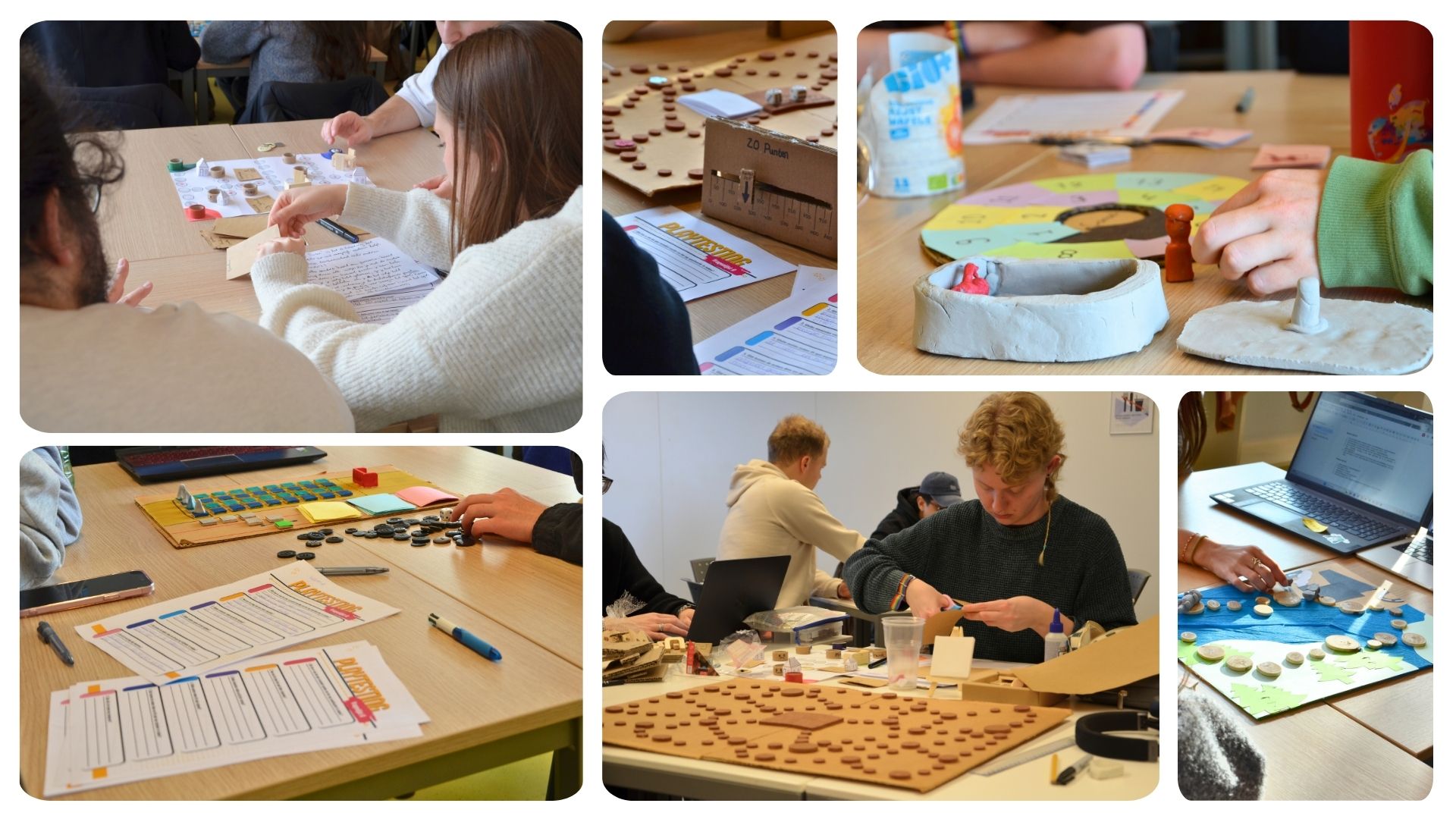
Cultural Game Jams are immersive, hands-on events where participants are game makers. By prototyping, storytelling, and imagining games that engage with heritage, societal values, and pressing issues, game makers are making, interpreting, and experiencing culture.
The audiovisual collections of the Netherlands Institute for Sound & Vision were often used as a jumping off point, with some Cultural Game Jams selecting specific themes to connect media and audiovisual heritage more closely with the target audience. After each Cultural Game Jam, key learnings and challenges helped to iterate and change the next Game Jam. It was important to reflect on participant feedback and experience, and the extent to which cultural heritage and European values were integrated.
The archives made everything feel real. We were designing for the future, but learning from the past Participant Game Jam 4
Iterating Cultural Game Jams
Cultural Game Jam 1 - April 13–14, 2024
- 15 participants (open recruitment).
- Theme: Participants defined their own cultural heritage themes, linking them to European values while drawing inspiration from the Sound and Vision Museum’s cultural heritage exhibition.
- Additional partners: Alongside the Cultural Hub partners, others were invited for the Expert Jury, including two game industry experts from the Dutch Games Association and Control Magazine, two independent game designers, one arts and culture expert from Utrecht University of the Arts, and two serious games researchers from TU Delft.
- Highlight: A key material was the EUjia board, a practical tool which linked participant-defined themes to European values, grounding the design process in cultural and civic reflection.
- 4 prototype games
- What worked: The Media Museum’s cultural heritage collection sparked meaningful and creative games. The Hilversum Cultural Hub partners collaborated well.
- What needs improvement: There was limited recruitment. The youth were not involved in planning the Game Jam, limiting their ownership of the structure. There were also too many activities creating a rush during game-making.
What changed?
- Formed Youth Advisory Board.
- Created a comprehensive handbook for participants, consolidating all information.
- Shifted from open to closed recruitment, working closely with educational partners.
- Game Design 101 workshop on the first day to help onboard participants.
Cultural Game Jam 2 - September 9–13, 2024
- 61 participants (ages 16-18).
- Theme: Worked with local schools to focus on Media and Democracy and Media and Equality, exploring cultural heritage values through the lens of civic participation and representation.
- Additional partners: For this Game Jam, the Hub worked closely with X11 high school in Utrecht. The expert council and jury included a specialist in misinformation, an expert in immersive media, and a games industry expert.
- Highlight: The formation of a Youth Advisory Board and the creation of a handbook for participants helped to scaffold participation.
- 15 prototype games
- What worked: Collaborating with an education partner for recruitment worked very well. Providing more streamlined and clear materials and processes helped to reduce stress experienced by participants. Working closely alongside the newly formed Youth Advisory Board strengthened collaboration and learnings.
- What needs improvement: There are still challenges in making the connection with cultural heritage and European values. Documentation gaps persisted, even with support. There were also dips in focus as the programme was not fully suited for a younger audience.
What changed?
- Youth Advisory Board members joined all prep sessions.
- For recruitment, the following Game Jam was embedded in the participants’ education.
- Set up Discord as a shared digital workspace and communications channel.
Cultural Game Jam 3 - February 17–28, 2025
- 23 participants (students from Creative Research Methods minor).
- Theme: Across all Hubs, the theme ‘That’s Not Fair!’ was tackled. The embedded Game Jam at Amsterdam University of Applied Sciences tackled media fairness and European values using the NISV cultural heritage digital archive and depot as inspiration.
- Additional partners: The expert council & jury included lecturers in gaming, a game designer, and experts from Control Magazine and EIT Culture & Creativity.
- Highlight: A group of four students continued their game development in their own project, ‘Perceptions of Play - Can You See the Value?’.
- 9 prototype games
- What worked: Providing an introductory session, ‘Value of Game Design 101’, really helped participants. Embedding this Game Jam in an educational context provided the opportunity to boost quality. There were clear cultural heritage touchpoints in the Archive Memory Game and the depot tour which presented the collection more tangibly as reusable assets.
- What needs improvement: There was still a limited integration of cultural heritage in the game prototypes. The setup of communication channels created friction, requiring a more lean and simplified approach.
What changed?
- Creation of a shared theme across the Hubs, ‘Heritage Remixed’, exploring games through culture.
- Tried out a new collaboration model where each location had specific creative purposes, such as Dropstuff’s Shelter space provided a relaxed opening setting for storytelling and collective brainstorming.
Cultural Game Jam 4 - September 10–16, 2025
- 28 participants (students Communication and Media Design, HU).
- Theme: Across three sites, university students focused on past and future relationship with water in the Netherlands using archival cultural heritage materials in their making of games through culture, taking a specific approach to the theme, ‘Heritage Remixed’ shared by the Hubs.
- Additional partners: The core participant group came from the Communication and Media Design programme at the Utrecht University of Applied Sciences (HU). The expert council and jury included lecturers in gaming, game designers, and serious gaming experts.
- Highlight: To bring the ‘Tides of Heritage’ theme to life, a curated selection of visual and audio materials from NISV archive, including oral histories and footage of 1953 North Sea flood, and a Remix & Water workshop, were created to facilitation imagination.
- 7 prototype games
- What worked: Structured facilitation tools like the Ideation Wheel and the Wave of Ideas critique helped to create more engagement than previous editions. This edition and the game prototypes were more clearly integrated with the cultural heritage archive.
- What needs improvement: There were still documentation gaps and challenges in balancing facilitation and autonomy of the participants. The four-day duration also meant there was not enough time for deeper reflection.
Read the report D4.1 for more detailed descriptions of each of the game jams, recruitment process, planning, execution, research methods, feedback.
Games
The games developed during the Cultural Game Jams are representative of the collective work of all stakeholders, reflecting workshops, resources, feedback, and other forms of co-creation involving every member of the ecosystem. Through the format of the Cultural Game Jam, partners and participants experimented with how to bring different forms of expertise and imagination together, co-creating game prototypes that engage with many forms of cultural values and cultural heritage.
The following image gallery shares a sample of the game prototypes co-created at the Hilversum Cultural Hub. They can be explored in full on the Cultural Games Prototype page.
Featured Games
A handful of cultural game prototypes were selected from the prototypes to be developed further in collaboration with Cultural Hub partner DROPSTUFF MEDIA, a pioneer in media design and creating immersive and interactive public experiences.
Smith and the Storm
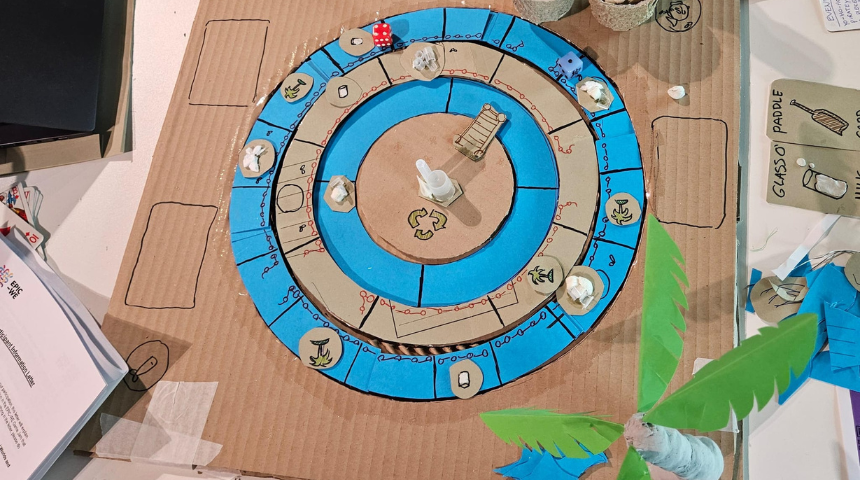
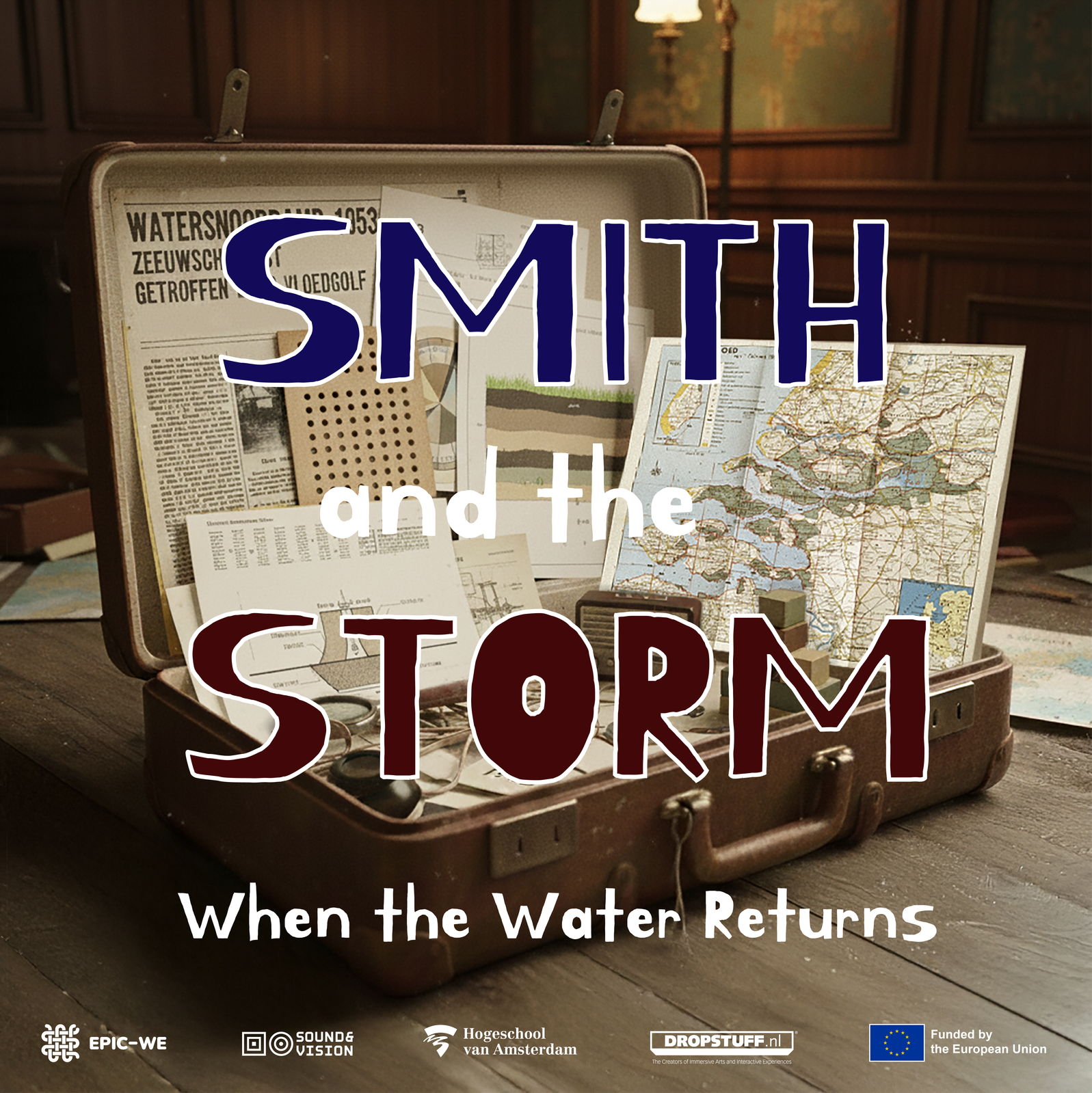
Smith and the Storm is an escape room game emphasising the importance of helping others despite our subtle differences. Shaped by flood stories and archival visuals, digging into a box of archival photos led to flooding being chosen as the theme.
Originally created by Gabriël Arts, Sanne Houwers, Tristan Bozarov, Duncen Krul, third-year CMD students from the Immersive Design specialisation at Utrecht University of Applied Sciences, who worked together during the fourth EPIC-WE Cultural Game Jam in the Netherlands, and later matured in collaboration with DROPSTUFF MEDIA.
Viral Spiral
Viral Spiral aims to educate players on how misinformation spreads and the consequences of sharing it. The students were inspired by a visit to The Mediamuseum in Hilversum and one of its games on media manipulation and fake news. The game was originally created by Team 6, four young people who took part in the third Cultural Game Jam in Hilversum and later matured in collaboration with DROPSTUFF MEDIA.

Learnings and Impact
Each Cultural Hub is guided by six core principles for cross-sector, participatory cultural innovation: democratizing cultural innovation, forming equal and transformative partnerships, meeting in the middle, co-creating for public good(s), developing real-world Cultural Hubs, and advancing empowered participation. These principles helped structure reflection and evaluation on how partners worked together, shared responsibility, and contributed to co-creation. The following section shares learnings and reflections from the Hilversum Cultural Hub across several of these principles. For more about how all six of these principles were implemented across all Hubs, read the D4.2 report.
Forming equal and transformative partnerships
Co-creation is not just about dividing tasks, but about genuinely exchanging perspectives, respecting each other’s input and shaping the process collectively Hilversum Cultural Hub YAB member
For genuine collaboration, each partner had to step outside their own sector habits and comfort zones to create a shared space. The Hilversum Cultural Hub experienced that when a team brings together people with many different skills, the division of work and task ownership can sometimes become muddy and unclear. The Hub brought together for example researchers from the Visual Methodologies Collective, and team members from the archive with a strong background in games. Although this can create a challenging ambiguity in responsibilities, it ultimately fostered refreshing ideas and a unique collaborative environment.
Meeting in the Middle
We work on the basis of trust and transdisciplinarity meaning we do not always have to meet halfway but trust on the expertise of the partners (and they on ours) Amsterdam University of Applied Science
‘Meeting in the middle’ asks that each partner extends and opens themselves to create an environment where all knowledges, perspectives, and voices are acknowledged and come together towards shared values, ambitions, and objectives. In the Hilversum Cultural Hub, partners trusted that each partner would carry out their responsibilities effectively, sharing regular updates in meetings or email. However, youth participation showed how balancing professional perspectives with emerging voices requires care and flexibility.